RetraBurn Official Website › Blog › Maca leads this blend
Reading a blend listMaca Leads This Blend, And Maca Is Not A Weight Herb
The first name on a proprietary blend is not there by accident, and on this label the first name is maca. That is genuinely useful information, and it points somewhere the front of the carton does not.
- A proprietary blend must list its members in descending order of weight, so the top of the list carries more than the bottom of it.
- On this label that puts maca root extract first of twenty-one, and L-carnitine HCl last.
- Maca has a real trial record. Almost none of it is about body weight.
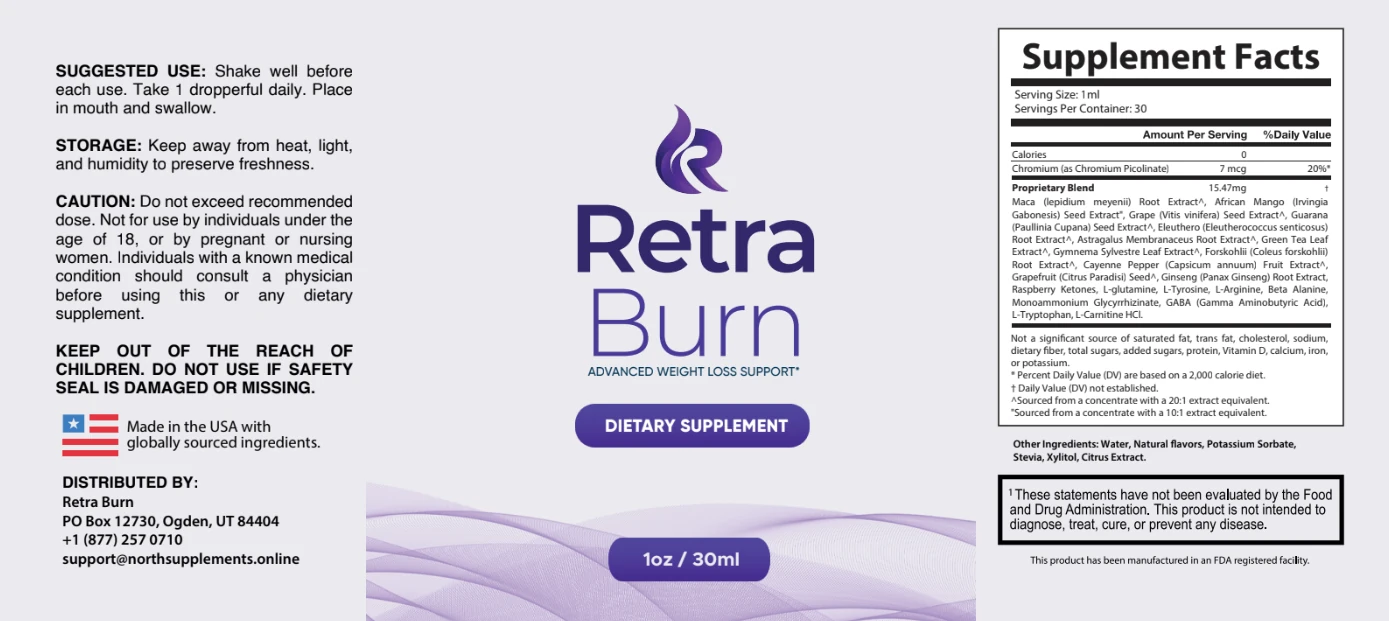
- The blend they all share weighs 15.47 mg in total, which caps every one of them.
- None of that makes the ingredient wrong. It makes the reputation and the evidence point in different directions.
Why the order of a blend list is information
Most readers skim a proprietary blend as a wall of names. It is not a wall. It is a sequence, and the sequence is required.
Under the federal rule for Supplement Facts panels, the members of a proprietary blend are listed in descending order of predominance by weight. The maker chooses whether to print a total. The maker does not choose the order.
That makes the first name the heaviest contributor and the last name the lightest, which is the one piece of free information a blend declaration always carries. It is not much. It is more than nothing, and it is routinely thrown away by readers who treat the list as decorative.
What being first actually buys maca
Being first in a blend of twenty-one tells you maca outweighs each of the other twenty. It does not tell you by how much, and the difference between those two statements is where most misreadings live.
A blend could be almost entirely its first ingredient, with twenty token amounts behind it. It could equally be twenty-one near-identical fractions listed in an order that reflects a difference of micrograms. The label permits both and distinguishes neither.
What can be said with certainty is the ceiling. The whole blend is declared at 15.47 mg, so maca is somewhere between a twenty-first of that figure and the whole of it. Nothing narrows that further, and nobody should pretend otherwise.
| What the order tells you | What it does not |
|---|---|
| Maca outweighs each of the other twenty entries | By how much it outweighs any of them |
| L-carnitine HCl is the lightest of the twenty-one | Whether it is a milligram or a microgram |
| The sequence was set by weight, not by marketing | Whether the differences between neighbours are meaningful |
| Every entry sits under one 15.47 mg ceiling | Where inside that ceiling any single entry falls |
Two columns, and the right-hand one is longer in practice than the left. That is the honest shape of a blend declaration.
The maca trial record, honestly summarised
Maca is not an obscure botanical with nothing behind it. It has a real, reviewed human literature, which puts it ahead of several things on this same panel.
A systematic review of maca for menopausal symptoms collects the work in that area. A second systematic review covers sexual function, and a meta-analysis looks at semen quality parameters. Three reviews, three distinct questions, and a body of evidence that exists to be argued about rather than invented.
None of the abstracts read while this article was written stated the milligrams the underlying trials used, which is why no dose figure appears anywhere on this website for maca. A number nobody checked is worse than no number at all.
What those reviews are and are not
- They are summaries of human trials, which is the right kind of evidence.
- They are small bodies of work, and the reviews say so themselves.
- They are about menopausal symptoms, sexual function and semen quality.
- They are not about body weight, appetite or metabolic rate.
- They are not studies of this formula, which has never been trialled.
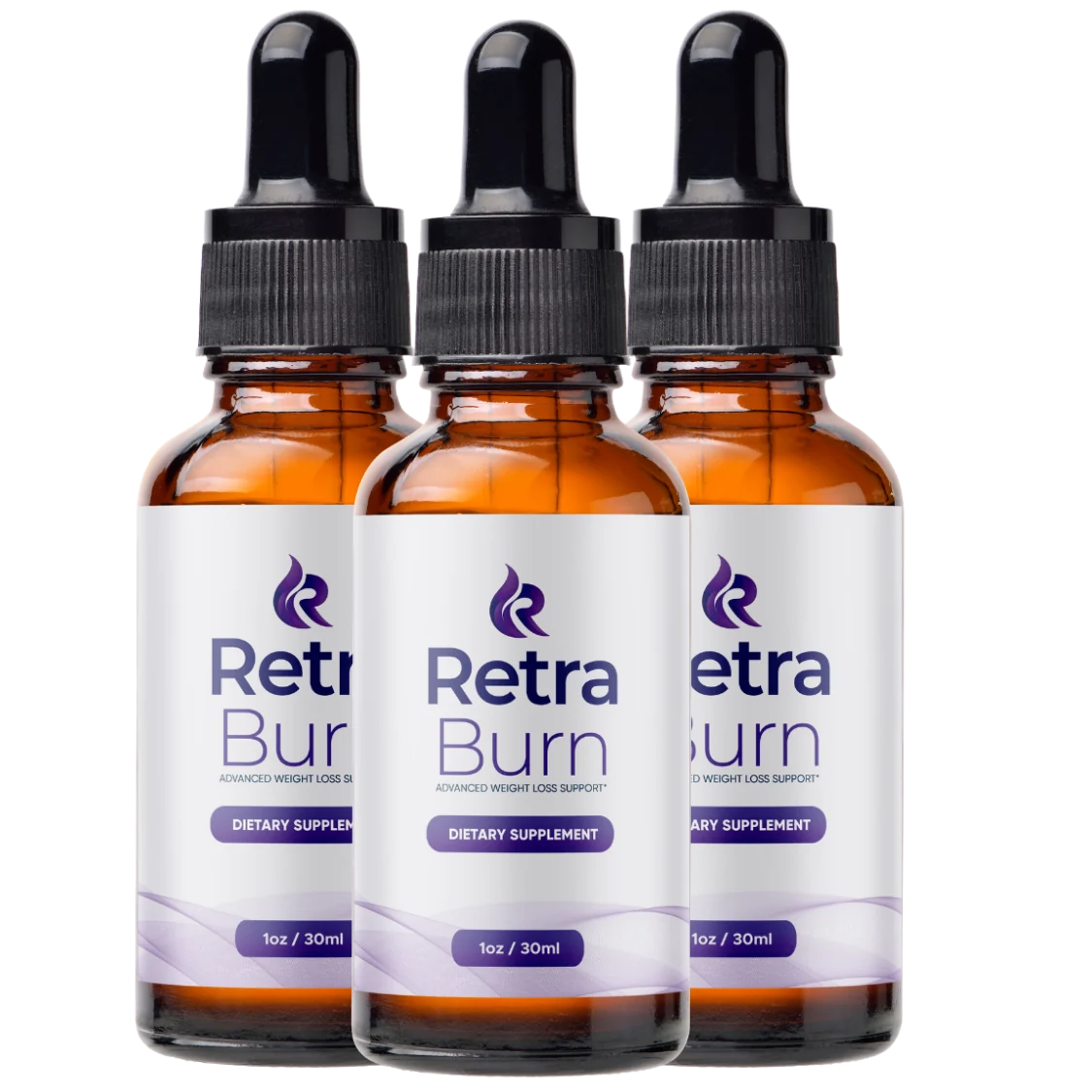
See the whole RetraBurn panel with maca at the top of it
Twenty-two entries reproduced row by row, with the extract mark each one carries and the research that exists for it.
Two bottles $158 · three bottles $207 · 60-day money-back guarantee
Order RetraBurn On The Official Website1 ml a day · 30 servings a bottle · lot RET-26/GO-1823
Where maca and weight actually meet
They barely do, and saying so is more useful than pretending otherwise.
The broadest fair summary of this whole category is a meta-analysis of herbal medicines and body weight, which pooled what exists across a long list of botanicals and did not come back enthusiastic. Maca is not one of the ingredients that emerges from that literature with a weight claim attached.
Its reputation in this aisle comes from somewhere else: it is an energy-coded ingredient in popular use, it has an exotic provenance that photographs well, and it is familiar enough to reassure a shopper who recognises the name. Those are marketing properties rather than pharmacological ones.
That is not a scandal. Plenty of formulas include a well-tolerated botanical with a good reputation and a different evidence base. It is worth knowing when you are looking at one.
Nothing here claims maca does not work, or that it is a poor ingredient. It claims that its published human record is about menopausal symptoms, sexual function and semen quality, and that a reader expecting a weight literature will not find one.
The ceiling all twenty-one share
Every argument on this page ends at the same place, which is the number the panel prints.
Fifteen point four seven milligrams is the whole declared weight of the blend. Maca is the largest share of it. The largest share of 15.47 mg is still, at absolute most, 15.47 mg, and in practice a good deal less because twenty other entries have to fit alongside it.
Set that against almost any botanical trial and the comparison is stark. This is not a criticism unique to this label, and it is the reason a printed blend total is worth having: a label that prints nothing leaves you unable to make the comparison at all.
| Blend entry | Position | What its research is about |
|---|---|---|
| Maca root extract | 1st of 21 | Menopausal symptoms, sexual function, semen quality |
| African mango seed extract | 2nd of 21 | Anthropometric and cardiovascular outcomes, with reviews disagreeing |
| Grape seed extract | 3rd of 21 | Flow-mediated dilation and blood pressure |
| Guarana seed extract | 4th of 21 | Cognitive performance, and one cycling time trial |
| L-carnitine HCl | 21st of 21 | Weight and body composition across 37 trials |
Five of the twenty-one, chosen to show how little the position on the list has to do with how relevant the research is.
Why a formula would lead on maca anyway
There are ordinary formulation reasons, and they are worth stating because the cynical reading is not the only one available.
Maca is a bulk-friendly root material with a long history of food use and a good tolerability record. In a liquid formula that has to carry twenty-one things in thirty millilitres and still taste of something a person will swallow, a well-behaved base material earns its place.
It is also recognisable. A panel of twenty-one names that a shopper cannot read is a panel that sells nothing, and the seller's own front-of-carton artwork puts maca among the six it chose to name.
Neither reason is a weight-loss reason, which is the whole point of this article. A formula can be sensibly built and still not be built around the thing its category implies.
- Read the order. It is required and it is free information.
- Find the total, if there is one. A ceiling beats nothing.
- Look up the first name, not the most exciting name.
- Ask what its published trials were actually about.
- Then decide what the formula is, rather than what the carton suggests.
How to read any blend list in two minutes
The method generalises, and it is the reason this article is worth reading even if you never buy this bottle.
Start at the top of the list, because the rule puts the weight there. Find the total if one is printed, because it is a ceiling on everything. Then check whether the first two or three names have a published human record in the category the carton is selling into.
If they do, the label is at least pointing the right way and the remaining question is amount. If they do not, the formula is being sold on a category its leading ingredients do not belong to, and the rest of the panel rarely rescues that. Either way you now know which question to ask, and it took two minutes. The longer version of this method is on the buyer checklist, and the full panel for this product is on the supplement facts page.
What the six on the carton have in common
One last observation, because it sharpens the whole argument. The seller picks six of the twenty-two panel entries for the front of the carton: chromium, maca, African mango, grape seed, guarana and cayenne.
Five of those six are plants a shopper has heard of. The sixth, chromium, is the only entry on the whole panel with an amount of its own. That is a well-judged selection and there is nothing dishonest in it.
What the six have in common is recognisability rather than evidence. African mango has the most category-relevant literature of the group and its two reviews disagree with each other. Cayenne has a thermogenesis literature at amounts this blend cannot approach. Grape seed is studied for blood pressure. Maca leads the list and is studied for something else again.
A carton is a summary written to be read in eight seconds. A panel is a record written to be read in two minutes. The gap between them is not a scandal, and a reader who only ever sees the first one is reading a different product from the one in the bottle.
RetraBurn is a dietary supplement. It is not a treatment for obesity or for any other condition, nothing on this page is medical advice, and anyone taking a prescription or living with a diagnosed condition should raise it with a clinician before starting anything new.
References
- Nutrition labeling of dietary supplements. 21 CFR 101.36. Electronic Code of Federal Regulations, Office of the Federal Register. https://www.ecfr.gov/current/title-21/chapter-I/subchapter-B/part-101/subpart-F/section-101.36
- Lee MS, Shin BC, Yang EJ, et al. Maca (Lepidium meyenii) for treatment of menopausal symptoms: a systematic review. Maturitas. 2011;70(3):227-33. PMID 21840656. https://pubmed.ncbi.nlm.nih.gov/21840656/
- Shin BC, Lee MS, Yang EJ, et al. Maca (L. meyenii) for improving sexual function: a systematic review. BMC Complement Altern Med. 2010;10:44. PMID 20691074. https://pubmed.ncbi.nlm.nih.gov/20691074/
- Lee HW, Lee MS, Qu F, et al. Maca (Lepidium meyenii Walp.) on semen quality parameters: a systematic review and meta-analysis. Front Pharmacol. 2022;13:934740. PMID 36110519. https://pubmed.ncbi.nlm.nih.gov/36110519/
- Maunder A, Bessell E, Lauche R, et al. Effectiveness of herbal medicines for weight loss: a systematic review and meta-analysis of randomized controlled trials. Diabetes Obes Metab. 2020;22(6):891-903. PMID 31984610. https://pubmed.ncbi.nlm.nih.gov/31984610/