RetraBurn Official Website › Blog › Caffeine with no number
The honest gapCaffeine With No Number: Two Stimulant Botanicals In One Blend
There is no caffeine row on this panel and no caffeine figure anywhere on the carton. There are also two caffeine-bearing botanicals on the blend list. Both statements are true, and reconciling them is a short piece of arithmetic worth doing.
- Guarana seed and green tea leaf both carry caffeine naturally. Both are on this blend list.
- No caffeine amount is printed, because a label is not required to declare caffeine that arrives inside a botanical.
- The whole blend weighs 15.47 mg, which caps the plant material and therefore caps the caffeine inside it.
- Pooled guarana trials ran 37.5 to 500 mg of guarana, carrying 4.3 to 100 mg of caffeine. This blend is far below the bottom of that range.
- The practical answer for a caffeine-sensitive reader is that the amount is bounded and very small, and that it is not zero.
Two caffeine-bearing entries, one blend line
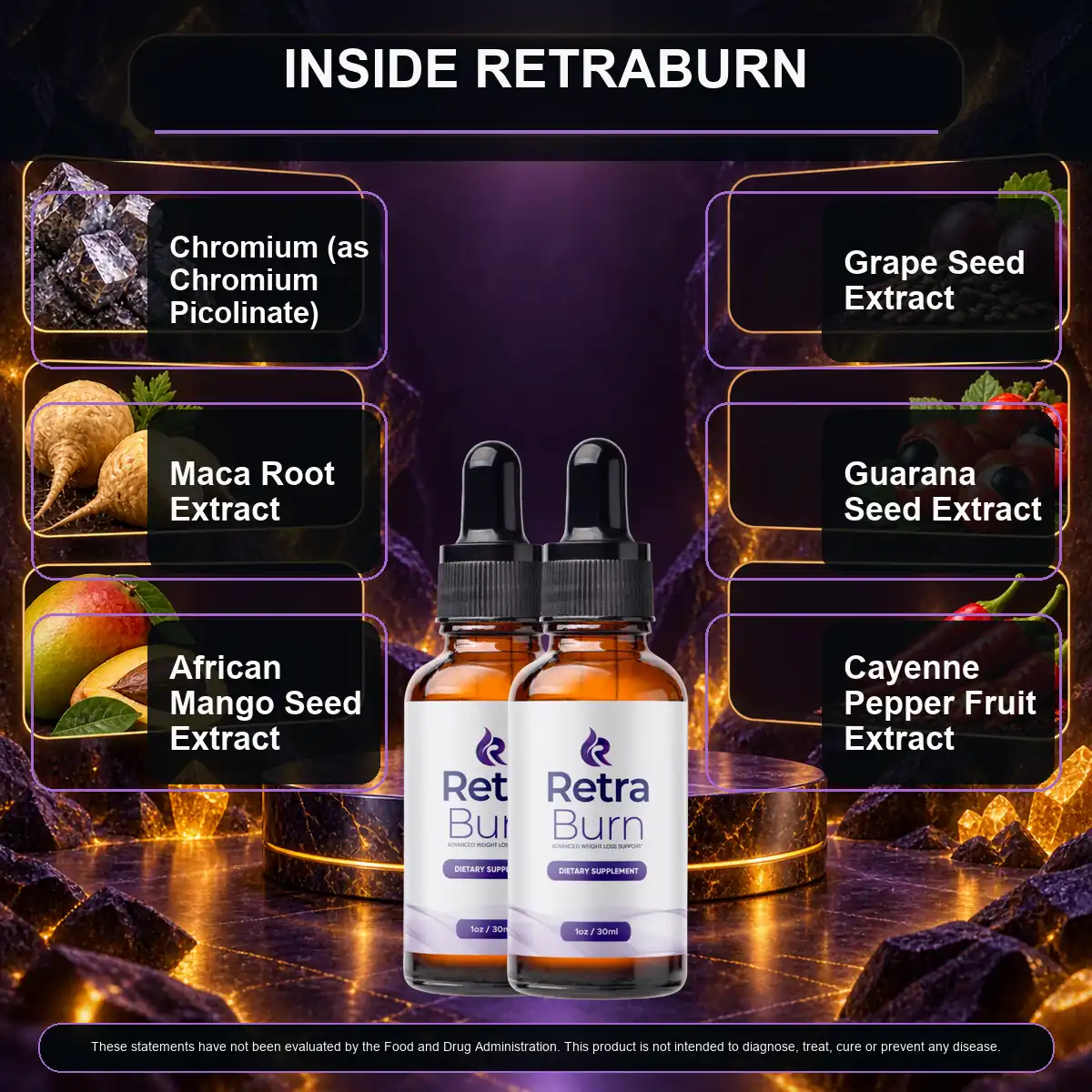
Fourth on the blend list is guarana seed extract, carrying a 20:1 mark. Seventh is green tea leaf extract, carrying the same mark. Both are ordinary inclusions in this category and neither is hidden.
Guarana is among the most caffeine-dense seeds in commercial use. Green tea leaf carries less, and a concentrated extract of it carries more than the brewed drink does. Neither is a synthetic addition; the caffeine is simply part of the plant.
So there is caffeine in this bottle. How much is a question the label does not answer directly, and the interesting part is that it can still be bounded.
Why no number is printed
This is a labelling question rather than a formulation one, and the federal rule for Supplement Facts panels explains it.
A panel declares the ingredients the maker adds. Caffeine that arrives as a constituent of a botanical is not a separate added ingredient, so no separate row is required for it. A product adding caffeine anhydrous would have to declare that; a product adding guarana declares guarana.
That is the rule working as designed rather than a loophole, and it applies to a great many products in this aisle. It is worth knowing because a reader scanning a panel for the word caffeine will conclude there is none, and that conclusion is wrong on any label carrying guarana, green tea, kola nut, yerba mate or coffee fruit.
- A panel declares added ingredients, not every constituent of them.
- Caffeine inside a botanical is a constituent of that botanical.
- Guarana, green tea, kola nut, yerba mate and coffee fruit all carry it.
- The absence of a caffeine row is therefore not evidence of an absence of caffeine.
- The presence of one of those plants is evidence of some, unbounded by the panel itself.
What the ceiling bounds
Here is where this label does better than most, and it is the reason this article can reach an answer at all.
The blend is declared at 15.47 mg in total. That figure covers all twenty-one entries together, so the plant material from guarana and green tea combined cannot exceed it, and in practice is a fraction of it because nineteen other entries share the same line.
Caffeine is a fraction of the plant material, not the whole of it. So whatever caffeine reaches you from this bottle is a fraction of a fraction of 15.47 mg. A label printing no blend total at all would leave that question genuinely open. This one closes it to a range that is, in ordinary terms, negligible.
| What is known | What follows |
|---|---|
| The whole blend weighs 15.47 mg | All twenty-one entries together weigh that, and no more. |
| Guarana and green tea are two of the twenty-one | Their combined weight is a fraction of 15.47 mg. |
| Caffeine is a fraction of each plant's weight | The caffeine is a fraction of that fraction. |
| No caffeine row appears on the panel | No exact figure exists, and none can be derived. |
Four steps, and the useful one is the third. A ceiling on plant material is automatically a ceiling on anything inside it.
The whole RetraBurn panel, printed as text
Twenty-two entries, two amounts, five footnotes and the extract mark each blend member carries.
Two bottles $158 · three bottles $207 · 60-day money-back guarantee
Order RetraBurn On The Official Website1 ml a day · 30 servings a bottle · lot RET-26/GO-1823
What guarana trials actually used
This is the one place on the whole panel where a published range exists, and it is worth quoting exactly.
A meta-analysis of guarana and cognitive performance pooled trials using 37.5 to 500 mg of guarana, carrying between 4.3 and 100 mg of caffeine. That range came off the abstract rather than from memory, and it is the only ingredient on this label with a stated dose range of that kind.
A cycling time-trial found guarana outperformed low-dose caffeine alone, which is an interesting result about guarana as a whole plant rather than as a caffeine delivery system.
Set 37.5 mg, the bottom of that range, against a blend of 15.47 mg shared twenty-one ways. The comparison does not need a calculator.
Why the bottom of the range is the fair comparison
It is tempting to compare against the top of a trial range, because the contrast is more dramatic. The bottom is the honest choice: it is the smallest amount at which anybody observed anything, and it is the number a formula would have to reach before the literature became relevant to it.
On that basis this blend is not in the conversation, and neither would most multi-ingredient liquids be. That is a fact about the format and the ingredient count rather than about this particular seller.
Green tea, and the other reason it is worth naming
Green tea leaf extract is the most-studied plant on this panel. A meta-analysis of EGCG and energy expenditure reported changes in the respiratory quotient from 300 mg of EGCG upward, which is again far above anything a 15.47 mg blend can supply.
It also carries the one safety literature on this panel that a reader should know about independently of the caffeine question. The LiverTox chapter on green tea collects reports of liver injury at concentrated doses.
The same ceiling applies, which makes a meaningful exposure from this bottle unlikely. The useful question is not about this bottle in isolation: it is whether a concentrated green tea product already reaches you from somewhere else, in which case the arithmetic is about your week rather than about one label.
If you are caffeine-sensitive
Some people are genuinely sensitive to very small amounts, and a bounded quantity is not the same as a zero one. The honest advice is short.
- The amount here is bounded by 15.47 mg of total plant material and is very small in ordinary terms.
- It is not zero, and no page on this website will tell you it is.
- If you react to a single cup of tea, take it in the morning rather than the evening.
- If you take any other supplement containing guarana, green tea or kola nut, the relevant total is across all of them.
- If a prescription of yours interacts with stimulants, that is a conversation worth having once, specifically, rather than a reason to worry generally.
A page that prints a caffeine-free claim it cannot support is a page that cannot be trusted on anything else. This label declares no caffeine amount and contains two caffeine-bearing plants, and both halves of that belong in front of a reader.
The other places caffeine reaches you in a day
Any honest answer to how much caffeine is in this bottle has to sit inside a larger answer about the day it is taken in, and that larger answer is usually the one that matters.
A cup of brewed coffee carries roughly eighty to a hundred milligrams. A mug of black tea carries perhaps forty. A can of an energy drink can carry a hundred and fifty or more, and many pre-workout powders carry two hundred or three hundred in a single scoop.
Against any of those, the caffeine available from a fraction of a 15.47 mg blend is not a rounding error so much as a footnote to a rounding error. Somebody worried about stimulant load who takes this product alongside three coffees is worrying about the wrong item on the list.
The reason to print any of this is proportion. A reader who learns there are two caffeine-bearing plants on a panel and stops there has been given a fact without a scale, and a fact without a scale is how ordinary products acquire reputations they do not deserve.
| Source | Roughly what it carries | How it compares here |
|---|---|---|
| A mug of brewed coffee | 80 to 100 mg | Several thousand times the plant material this whole blend contains. |
| A mug of black tea | About 40 mg | Still far beyond anything a 15.47 mg blend can supply. |
| A standard energy drink | 150 mg and up | A different category of exposure entirely. |
| The lowest guarana trial dose | 37.5 mg of guarana, 4.3 mg caffeine | More than twice the weight of this entire blend, before sharing it twenty-one ways. |
Everyday figures, given as approximate ranges because they vary with preparation. The point is the order of magnitude rather than the decimal place.
What a better label would print
It is easy to say a label should disclose more and harder to say exactly what. Three things would close this gap entirely and none of them is difficult.
A caffeine content figure for the finished serving, which several products in adjacent categories already print voluntarily. An amount for each blend member, which removes the need to reason from a ceiling at all. And a standardisation figure for the guarana and green tea extracts, which would say how much of the active fraction each milligram carries.
None is required and none is present. What is present is a blend total, which is more than a great many competitors print and is the only reason the question above could be answered at all. The rest of what this panel does and does not settle is on the supplement facts page, and the ingredient-by-ingredient evidence is on the ingredients page.
RetraBurn is a dietary supplement. It is not a treatment for obesity or for any other condition, nothing on this page is medical advice, and anyone taking a prescription or living with a diagnosed condition should raise it with a clinician before starting anything new.
References
- Hack B, Penna EM, Talik T, et al. Effect of guarana (Paullinia cupana) on cognitive performance: a systematic review and meta-analysis. Nutrients. 2023;15(2). PMID 36678305. https://pubmed.ncbi.nlm.nih.gov/36678305/
- Penna EM, Harp A, Hack B, et al. Guarana (Paullinia cupana) but not low-dose caffeine improves cycling time-trial performance versus placebo. Int J Sport Nutr Exerc Metab. 2024;34(1):30-37. PMID 37898479. https://pubmed.ncbi.nlm.nih.gov/37898479/
- Kapoor MP, Sugita M, Fukuzawa Y, et al. Physiological effects of epigallocatechin-3-gallate (EGCG) on energy expenditure for prospective fat oxidation in humans: a systematic review and meta-analysis. J Nutr Biochem. 2017;43:1-10. PMID 27883924. https://pubmed.ncbi.nlm.nih.gov/27883924/
- Green Tea. In: LiverTox: Clinical and Research Information on Drug-Induced Liver Injury. Bethesda (MD): National Institute of Diabetes and Digestive and Kidney Diseases; 2012-. Updated 20 November 2020. PMID 31643260. https://pubmed.ncbi.nlm.nih.gov/31643260/
- Nutrition labeling of dietary supplements. 21 CFR 101.36. Electronic Code of Federal Regulations, Office of the Federal Register. https://www.ecfr.gov/current/title-21/chapter-I/subchapter-B/part-101/subpart-F/section-101.36